
January 14, 2014:
Sitting in a film studio in Studio City, with the largest green screen I have ever seen behind me, a mic is clipped to the lapel of my jacket. The lights and reflectors are so bright in my face I can hardly see, but someone comes out with a make up brush, to dull the shine off my balding head and my nose. The producer sits half behind a light screen, in shadow. The camera lens is pointed at me, but I am talking to the interviewer slightly to the side.
“Well, let’s get going. When you answer the questions, repeat some of the question back in your answer. For example, if I ask ‘Why did people go to the gold rush?’ you answer, ‘People went to the gold rush because . . .” Got it?”
“Sure.”
Maybe I should have said, Yes, I’ve got it that I should rephrase your question when I answer it.
“Great,” he says, let’s get started . . .
* * *
What am I doing here? It is the first day of classes, I am supposed to be meeting with two classes on American History in Portland, not being filmed for a television show on the facts and fictions of American History in California.
I am not a celebrity hound. I have no desire to be on television. I don’t even have a cable service, and will not be able to see this episode when it airs. When I got the email asking if I would be willing to be interviewed, my first reaction was to ignore it.
But 2013 was a very strange year. In March I was asked to write a book for an academic publisher on the California gold rush. I have not written a book in many years, though I have been struggling with one to the point of despair. Just before this offer came in, I had decided to put the other project on the back burner for a while and try something else. So when the offer of a contract to write a book on the gold rush came in, I happily leapt at it.
Yet getting that offer was odd. Yes, I published a book on the gold rush years ago. It was based on my dissertation, and centered on the development of Sacramento in the early years of the rush. But the gold rush had never really been a passion of mine. My dissertation was originally going to focus on the fur trade. But the project was too large, and the focus somewhat fuzzy. And while doing other reading, I stumbled over a book on land titles in California, and found a strange flaw. The author had described the worst of the land riots in early California taking place in Sacramento in 1850. Then, several pages later, he blamed the riot on the Land Act of 1851! Trying to resolve this weird statement, I looked up a couple of sources, one which believed the riot had been started by squatters and scoundrels, and led by a man in the devil’s service—a man who within a few years was a hero in Kansas. The more I looked, the less this looked like rioting squatters. They were organized, held meetings, kept a land title office, and looking at their claims, the law (what little there was at the time) was very likely on their side. No one had looked at this closely before, and most of the source material was in Northern California, so after talking it over with my dissertation committee chair, I switched topics. I was not interested in the gold rush per se, I was more interested in the peculiar way in which Sacramento had been founded and developed.
I finished the dissertation in 1992, and submitted it to publishers in January, 1993. I had a publisher within six months—but problems within the press and repeated requests to change the focus of the work, as well as time I was spending not writing but starting as a new assistant professor, spending time with family, moving from Nebraska to Oregon, etc etc—bottom line, the book did not see the light of day until 2003. And much of the experience was so painful that by that time I was shy of going through the brutal process again.
But I had gotten into history in the first place to WRITE. I had actually started as an English major in college, and switched mostly because I wanted to write about history, and develop my own voice, not study and critique the writing styles of other great, and usually dead, literary giants.
After the publication of Gold Rush Capitalists (the press’s choice of title, not mine—another point I was sore about!), I settled into Portland, and started looking at the Lewis and Clark expedition from an international perspective. Over the next decade I actually wrote that book, or most of it, four separate times! I have labored on this unpublished work for far longer than it took Lewis and Clark to cross the continent and come back again! I was frustrated, demoralized, and anxious to try my hand at a fresh project, and with luck, by letting it lie dormant for a while, be able to come back to that project sometime in the future with renewed energy.
I started looking at and doing preliminary work on a variety of projects: a social history of American Roads; a study of American communication systems; a look at the American frontier from an international perspective; a look at medicine during the Civil War; even a memoir of my mother’s life. All were interesting, all were potential do-able! But the offer of a contract, before I had even written a single word, was too wonderful to refuse.
During the summer of 2013, as my wife and I were traveling and teaching in Europe, I was also playing tag-email with editors at the press, getting the details of the book worked out—a prospectus/outline/ sense of themes, etc. I was in Salzburg when the early details were laid out, in Paris as the editors and their reviewers responded, and in Dublin when I finally signed the contract.
The project started well. I was excited and had a pretty clear vision of what it would be. But, due to all the traveling during the summer, I was unable to really get started on the project (though I did write the first lines of the introduction waiting in an airport for a flight). We arrived home again, just before classes started, and I dove into the project.
* * *
Have you ever dived into a deep pool, only to discover at the last second that, in fact, the water is very shallow?!
It’s painful.
Just as I was getting started, I hit the dreaded “Writer’s Block,” the bogey man who haunts the dark corners of a writer’s mind, and lives solely to make sure your own ideas do not. Then, at the same time, I went through a kind of crisis at work. I was not only a full time teacher, with a full load of classes already overflowing with students, but I was also an assistant to the Dean for communications. Just as I was starting to run into the writer’s bock demon, that position went through a brutal change—I was asked to continue this overload and add other duties to the job, while remaining a full time teacher and while trying to write this book that the demon would not let happen anyway.
It was a crystal clear turning point: either work in the Dean’s office, or write the book. After a few days in turmoil, I resigned my position in the Dean’s office. Now I was committed to the book.
But the demon had other ideas.
Over the rest of the semester, I struggled with that monster daily and nightly. And I was on the verge of giving it all up. But I got help from someone who saw the demon in me better than I could see it. She recommended Julia Cameron’s The Artist’s Way, a twelve week recovery program for blocked artists.
Meanwhile, the coincidences were piling up. At about this same time, I was asked to write a review for two historical journal on books on the gold rush and California. I accepted, thinking that a couple of short assignments would help weaken the demon’s hold on my writing. And then, at the end of the year, I got the email asking me to fly to Los Angeles to be filmed talking about the gold rush for a television program. No money involved, I would not be paid. But it did seem like another sign from the universe. I mean, after years of not writing or really even thinking about the gold rush, I had suddenly been offered a book contract, two book reviews, and a television appearance all based on my expertise on a topic I had not really thought much about in ten years, and that I had originally selected because I could do it conveniently!
* * *
So, it is now 2014, a new year. Classes and college work usually get in the way of my writing, relegating it to secondary status (or worse). Teaching had been my priority. But I had promised myself that, now, writing would come first. It was where my soul longed to be.
So it was appropriate that I was doing something related to the gold rush rather than being in class that first day—where I would call the roll, hand out the reading list, tell them I was serious about the rules for the course, and then generally let them go! Instead, I sent them the reading list by email, and had others take the roll.
So, I guess that is what I was doing there, in California instead of Oregon, talking of the gold rush instead of taking roll.
* * *
I have one year now to write the book and get it in to the publisher. Gathering my notes, scribbles, and ideas together, I have finally started getting it written. But it is an odd deja vu journey. After I published my previous book, I had saved the notes and books I and accumulated for a few years, but after a couple of moves, house cleanings, and garage clearings, I have dumped my notes and files, and am more or less starting again nearly from scratch. Of course, I know the subject matter, and where I can go to recreate my notes, if I need to. Yet at the same time, I am now focused more on the entire rush, not just the Sacramento region.
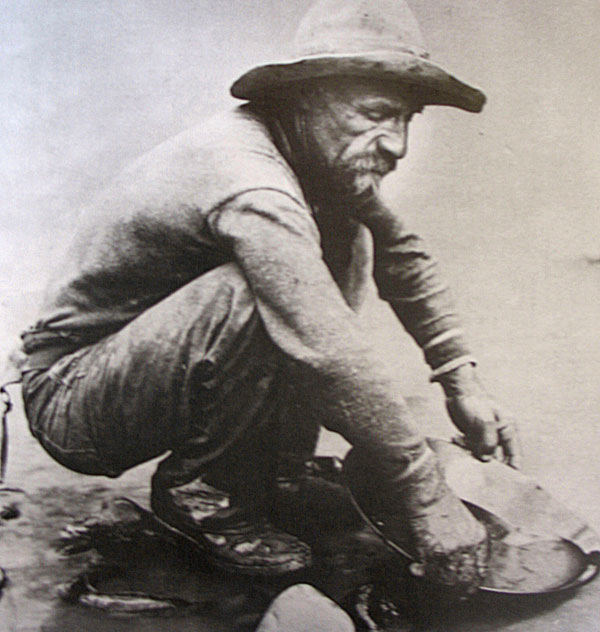
So, over the next few months, I will be traveling to archives and libraries, collecting sources and illustrations, and cobbling together a manuscript, while keeping the demon lurking in my mind at bay. And, in the hopes that writing about my progress will make it easier to actually get the book itself written, I am starting this blog: “Revisiting the Gold Rush.”
I am sure that the coming year’s travels and research will be quite a ride!
* * *
 Wist Blog: Creative Scribbles